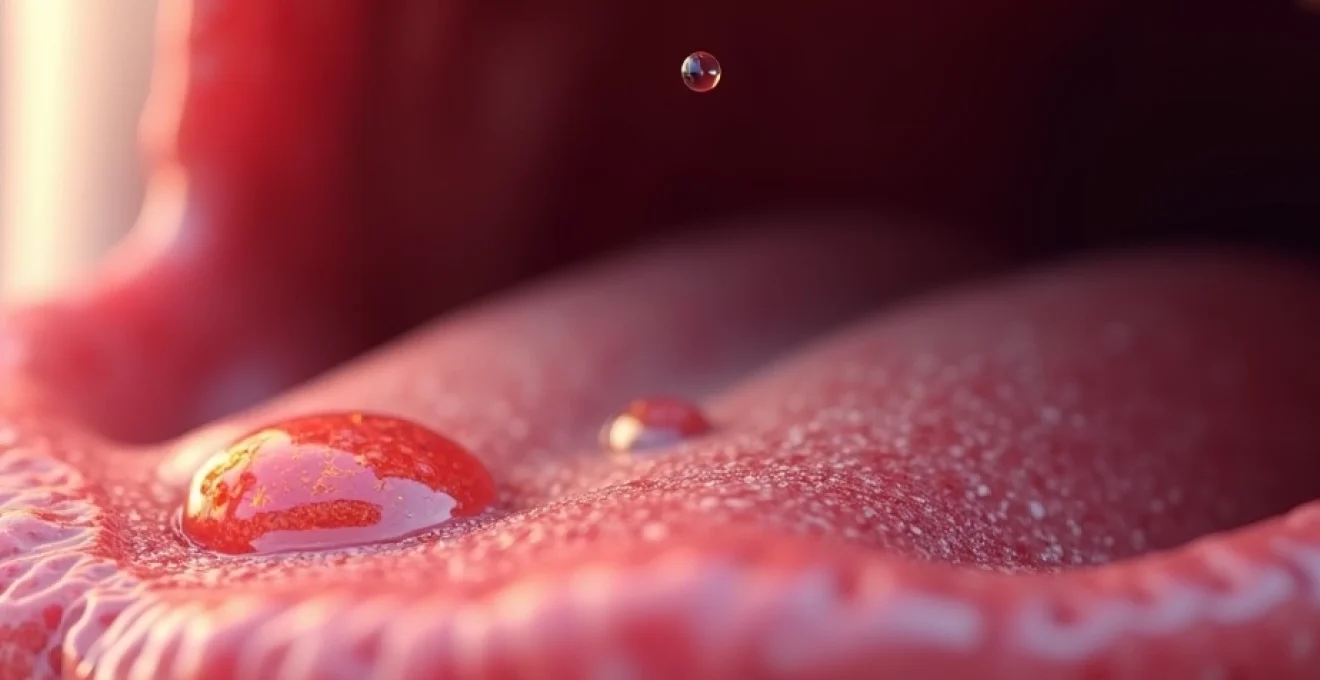
Blood blisters in the throat represent a concerning symptom that can manifest due to various underlying pathological processes. These haemorrhagic lesions, characterised by their dark red to purple appearance, occur when blood vessels beneath the mucosal surface rupture and blood accumulates within tissue spaces. While many cases result from minor trauma or benign conditions, some instances may indicate more serious systemic disorders requiring immediate medical attention. Understanding the diverse aetiologies behind throat blood blisters enables healthcare professionals and patients to distinguish between transient, self-limiting conditions and those necessitating comprehensive investigation and treatment.
Pathophysiology of haemorrhagic vesicle formation in oropharyngeal tissues
The formation of blood blisters in throat tissues involves complex vascular and cellular mechanisms that distinguish these lesions from typical fluid-filled vesicles. Understanding these underlying processes provides crucial insight into why certain individuals develop haemorrhagic lesions while others experience standard blister formation.
Capillary fragility and subepithelial bleeding mechanisms
Capillary fragility represents a fundamental factor in blood blister development within oropharyngeal tissues. The delicate nature of throat mucosa, combined with its rich vascular supply, creates an environment particularly susceptible to microhaemorrhages. When mechanical stress, chemical irritation, or inflammatory processes compromise capillary integrity, blood extravasates into surrounding tissues, forming characteristic haemorrhagic vesicles. This process often occurs in individuals with inherent vascular weakness or those experiencing acute inflammatory responses that increase vessel permeability.
The subepithelial bleeding mechanism involves rupture of superficial blood vessels located just beneath the mucosal surface. These vessels, primarily consisting of venules and capillaries, become engorged during inflammatory states or following direct trauma. The resulting haemorrhage creates a pocket of blood between tissue layers, manifesting as the distinctive dark-coloured blister observed clinically.
Coagulation cascade disruption in mucosal environments
Disruption of normal coagulation processes significantly contributes to blood blister formation in throat tissues. The oral cavity’s unique environment, characterised by constant moisture, bacterial presence, and mechanical stress from swallowing and speaking, creates challenges for effective haemostasis. When coagulation factors become depleted or dysfunctional, even minor vascular injuries can result in prolonged bleeding and subsequent vesicle formation.
Anticoagulant medications, liver dysfunction, or inherited bleeding disorders can compromise the coagulation cascade, making individuals more susceptible to haemorrhagic lesions. The throat’s mucosal environment may further complicate clot formation due to fibrinolytic activity from saliva and bacterial enzymes, potentially prolonging bleeding episodes and increasing blister formation risk.
Platelet aggregation dysfunction and vascular permeability
Platelet dysfunction represents another critical mechanism underlying blood blister development in throat tissues. Thrombocytopenia, characterised by reduced platelet counts below 150,000 per microlitre, significantly impairs primary haemostasis and increases bleeding tendency. Even with adequate platelet numbers, functional abnormalities can compromise aggregation and plug formation at injury sites.
Vascular permeability changes accompany many conditions associated with throat blood blisters. Inflammatory mediators, including histamine, prostaglandins, and cytokines, increase vessel wall permeability, allowing blood components to leak into surrounding tissues. This process, combined with platelet dysfunction, creates ideal conditions for haemorrhagic vesicle formation following minimal trauma or spontaneous vessel rupture.
Inflammatory mediator release and tissue response patterns
The release of inflammatory mediators plays a pivotal role in blood blister pathogenesis within oropharyngeal tissues. Mast cell degranulation releases histamine, leukotrienes, and other vasoactive substances that increase vascular permeability and promote bleeding. These mediators also recruit inflammatory cells, including neutrophils and macrophages, which release additional factors that can damage vessel walls and perpetuate the bleeding process.
Tissue response patterns following inflammatory mediator release vary depending on the underlying cause and individual patient factors. Some individuals develop rapid, localised responses resulting in single lesions, while others may experience widespread mucosal involvement with multiple haemorrhagic vesicles. The intensity and duration of inflammatory responses directly correlate with lesion severity and healing time.
Infectious aetiologies and microbial pathogenesis
Infectious agents represent significant contributors to blood blister formation in throat tissues through various pathogenic mechanisms. These microorganisms can directly damage mucosal surfaces, trigger intense inflammatory responses, or disrupt normal haemostatic mechanisms, leading to haemorrhagic lesion development.
Viral-induced pharyngeal haemorrhage: Epstein-Barr virus and cytomegalovirus
Epstein-Barr virus (EBV) infection commonly presents with severe pharyngitis that can progress to haemorrhagic lesion formation. The virus targets B-lymphocytes and epithelial cells, causing extensive mucosal inflammation and potential vessel damage. EBV-induced mononucleosis frequently presents with palatal petechiae and may progress to frank bleeding or blood blister formation in severely affected individuals. The inflammatory response triggered by viral replication and immune system activation creates conditions conducive to vascular fragility and subsequent haemorrhage.
Cytomegalovirus (CMV) represents another significant viral pathogen capable of inducing haemorrhagic pharyngeal lesions, particularly in immunocompromised patients. CMV infection can cause direct endothelial damage and compromise vascular integrity, leading to bleeding complications. The virus’s tropism for endothelial cells results in vasculitis and increased bleeding tendency, making patients susceptible to spontaneous haemorrhagic vesicle formation even without obvious trauma.
Streptococcal pharyngitis and Beta-Haemolytic bacterial colonisation
Group A Streptococcus pyogenes infection can occasionally progress to severe pharyngitis with haemorrhagic complications. The bacteria produce various toxins and enzymes, including streptolysin O and hyaluronidase, which damage tissue structures and compromise vascular integrity. Severe streptococcal pharyngitis may present with blood-tinged exudates, petechial rashes, and in rare cases, frank haemorrhagic vesicles within the throat tissues.
Beta-haemolytic streptococci produce haemolysins that directly damage red blood cells and can contribute to localised bleeding. The inflammatory response triggered by bacterial toxins increases vascular permeability and may predispose to bleeding complications, particularly in individuals with underlying coagulation abnormalities or those receiving anticoagulant therapy.
Candida albicans invasion and fungal mucosal disruption
Candida albicans infection can progress from superficial thrush to invasive candidiasis with potential haemorrhagic complications. The fungus produces proteases and phospholipases that damage epithelial barriers and compromise mucosal integrity. In severe cases, particularly in immunocompromised patients, invasive candidal infection can erode blood vessels and cause significant bleeding, potentially manifesting as haemorrhagic lesions or frank ulceration.
Fungal invasion disrupts normal tissue architecture and can compromise local haemostatic mechanisms. The inflammatory response to fungal antigens further increases vascular permeability and may predispose to bleeding complications. Patients with diabetes, those receiving corticosteroids, or individuals with other immunosuppressive conditions face increased risk for severe candidal infections with potential haemorrhagic manifestations.
Herpes simplex virus type 1 vesicular manifestations
Herpes simplex virus type 1 (HSV-1) infection typically presents with characteristic vesicular lesions that may occasionally appear haemorrhagic. The virus causes direct cytotoxic effects on infected epithelial cells and triggers intense inflammatory responses that can damage surrounding blood vessels. Primary HSV-1 infection, particularly in young children, may present with severe gingivostomatitis that includes haemorrhagic vesicles and significant mucosal bleeding.
The vesicular lesions of HSV-1 can become secondarily infected or traumatised, leading to bleeding and haemorrhagic appearance. Recurrent infections may also present with atypical haemorrhagic vesicles, particularly in immunocompromised patients where viral replication may be more extensive and tissue damage more severe.
Systemic haematological disorders and coagulopathies
Systemic blood disorders represent crucial underlying causes of spontaneous or easily triggered blood blister formation in throat tissues. These conditions affect the body’s ability to maintain normal haemostasis, making patients susceptible to bleeding complications from minimal trauma or even spontaneous vessel rupture.
Thrombocytopenic purpura and platelet count abnormalities
Idiopathic thrombocytopenic purpura (ITP) significantly increases the risk of spontaneous bleeding and blood blister formation throughout mucosal surfaces, including the throat. Platelet counts below 50,000 per microlitre dramatically increase bleeding risk, while counts below 20,000 per microlitre may result in spontaneous haemorrhage without obvious precipitating factors. Throat blood blisters in ITP patients often appear suddenly and may be accompanied by petechiae on other mucosal surfaces.
Thrombotic thrombocytopenic purpura (TTP) represents a more severe condition characterised by thrombocytopenia, microangiopathic haemolytic anaemia, and potential bleeding complications. Patients with TTP may develop haemorrhagic lesions in various locations, including the oropharynx, due to severely reduced platelet counts and compromised microvascular circulation. The condition requires immediate medical intervention to prevent life-threatening complications.
Von willebrand disease and factor VIII deficiency presentations
Von Willebrand disease, the most common inherited bleeding disorder, can manifest with mucosal bleeding complications, including blood blister formation in throat tissues. The condition affects platelet adhesion and aggregation due to deficient or dysfunctional von Willebrand factor, making patients susceptible to prolonged bleeding from minor trauma. Type 2B and Type 3 von Willebrand disease present the highest risk for spontaneous mucosal bleeding and haemorrhagic vesicle formation.
Factor VIII deficiency (haemophilia A) can also present with mucosal bleeding complications, though throat involvement is less common than in von Willebrand disease. Patients with severe factor VIII deficiency may experience prolonged bleeding following dental procedures or throat trauma, potentially resulting in haemorrhagic lesion formation. The bleeding tendency correlates with factor VIII activity levels, with severe deficiency (less than 1% activity) carrying the highest risk for spontaneous bleeding episodes.
Anticoagulant therapy complications: warfarin and novel oral anticoagulants
Warfarin therapy, particularly when inadequately monitored or in the setting of drug interactions, can predispose patients to bleeding complications including throat blood blisters. International normalised ratio (INR) values above 3.0 significantly increase bleeding risk, while values above 5.0 may result in life-threatening haemorrhage. Patients on warfarin therapy who develop throat blood blisters require careful evaluation of their coagulation status and potential dose adjustments.
Novel oral anticoagulants, including dabigatran, rivaroxaban, and apixaban, carry lower bleeding risks compared to warfarin but can still predispose to mucosal bleeding complications.
These medications lack readily available reversal agents (except for dabigatran), making bleeding complications potentially more challenging to manage. Patients receiving novel oral anticoagulants who develop spontaneous throat blood blisters may require temporary discontinuation and supportive care while awaiting drug clearance.
Leukaemic infiltration and bone marrow suppression effects
Acute leukaemias can present with mucosal bleeding complications due to thrombocytopenia, anaemia, and potential infiltration of haematopoietic malignant cells into mucosal tissues. Leukaemic infiltration of the oral cavity and throat can cause tissue friability, ulceration, and spontaneous bleeding. The combination of low platelet counts and tissue infiltration creates ideal conditions for haemorrhagic lesion development.
Chronic leukaemias may also present with bleeding complications, though typically less severe than acute forms. Chronic lymphocytic leukaemia can cause hypogammaglobulinaemia and increased infection susceptibility, potentially leading to secondary bleeding complications. Bone marrow suppression from chemotherapy treatment further compounds bleeding risks and may result in treatment-related haemorrhagic complications.
Mechanical trauma and iatrogenic causes
Mechanical trauma represents one of the most common causes of blood blister formation in throat tissues, ranging from minor self-inflicted injuries to significant iatrogenic complications during medical procedures. Understanding these traumatic mechanisms helps identify preventable causes and guide appropriate treatment strategies.
Direct trauma from accidental biting, consumption of sharp or hard foods, or foreign body insertion can cause immediate vascular damage and subsequent blood blister formation. The posterior oropharynx and soft palate are particularly vulnerable due to their prominent positioning and rich vascular supply. Hot foods or beverages can cause thermal injury with associated vascular damage, while acidic substances may cause chemical burns that compromise mucosal integrity and predispose to bleeding complications.
Iatrogenic causes include complications from dental procedures, endotracheal intubation, or nasogastric tube insertion. Laryngoscopy and bronchoscopy procedures can cause direct trauma to throat structures, particularly in patients with difficult airways or those requiring multiple intubation attempts. The use of rigid instruments or excessive force during procedures significantly increases the risk of mucosal tears and subsequent haemorrhagic lesion formation.
Chronic mechanical irritation from ill-fitting dental appliances, orthodontic devices, or continuous positive airway pressure (CPAP) masks can cause repeated minor trauma that eventually results in blood blister development. The cumulative effect of chronic irritation may compromise local tissue integrity and predispose to bleeding complications from minimal additional trauma. Regular evaluation and adjustment of dental appliances can prevent many of these complications.
Vigorous tooth brushing or flossing, particularly in individuals with bleeding tendencies, can cause gingival trauma that may extend to adjacent throat tissues. The use of hard-bristled toothbrushes or excessive force during oral hygiene procedures can damage delicate mucosal surfaces and predispose to haemorrhagic lesion formation. Patient education regarding appropriate oral hygiene techniques can significantly reduce trauma-related bleeding complications.
Autoimmune and inflammatory conditions
Autoimmune and inflammatory conditions represent important but often overlooked causes of recurrent blood blister formation in throat tissues. These systemic disorders can affect mucosal surfaces throughout the body, including the oropharynx, and may present with characteristic patterns of lesion distribution and appearance.
Pemphigus vulgaris, a rare autoimmune blistering disorder, can present with painful oral lesions that may appear haemorrhagic due to secondary trauma or infection. The condition results from autoantibodies targeting desmosomal proteins, leading to loss of cell-to-cell adhesion and subsequent blister formation. Oral lesions in pemphigus vulgaris often precede skin involvement and may be the presenting feature of the disease. The blisters typically rupture quickly, leaving painful erosions that may become secondarily infected.
Behçet’s disease, a chronic multisystem inflammatory disorder, characteristically presents with recurrent oral ulceration that may occasionally appear haemorrhagic. The condition affects blood vessels of all sizes and can cause vasculitis with associated bleeding complications. Behçet’s disease typically presents with painful oral ulcers, genital ulcers, and ocular involvement, though mucosal lesions may be the predominant feature in some patients.
Systemic lupus erythematosus can affect oral mucosal surfaces and may present with ulcerative lesions that can become haemorrhagic, particularly in patients with associated thrombocytopenia or coagulation abnormalities.
The oral lesions of lupus may be painless initially but can become symptomatic with secondary infection or trauma. Patients with lupus
often require monitoring for haematological complications, including thrombocytopenia and anaemia, which can exacerbate bleeding tendencies and increase the risk of spontaneous haemorrhagic lesion formation.
Inflammatory bowel disease, particularly Crohn’s disease, can present with extraintestinal manifestations affecting the oral cavity and throat. The chronic inflammatory state associated with these conditions can compromise mucosal integrity and increase susceptibility to bleeding complications. Patients with active inflammatory bowel disease may develop aphthous-like ulcerations that can become haemorrhagic due to the underlying inflammatory process and potential nutritional deficiencies affecting healing mechanisms.
Sjögren’s syndrome, characterised by dry eyes and mouth due to autoimmune destruction of exocrine glands, can predispose to oral bleeding complications through multiple mechanisms. The reduced salivary flow compromises the mouth’s natural protective mechanisms, while chronic inflammation can affect mucosal integrity. Patients with Sjögren’s syndrome may develop oral ulcerations that become more prone to bleeding due to the dry environment and impaired healing responses.
Pharmacological and toxicological factors
Various medications and toxic substances can predispose individuals to blood blister formation in throat tissues through multiple mechanisms, including direct mucosal toxicity, coagulation interference, and immune system suppression. Understanding these pharmacological and toxicological factors is crucial for preventing iatrogenic complications and managing patients receiving high-risk medications.
Chemotherapy agents, particularly those with significant mucosal toxicity such as methotrexate, 5-fluorouracil, and doxorubicin, can cause severe mucositis with potential haemorrhagic complications. These medications disrupt rapidly dividing epithelial cells, compromise mucosal barrier function, and can predispose to bleeding through direct tissue damage and secondary thrombocytopenia. The combination of mucosal fragility and reduced platelet counts creates ideal conditions for spontaneous blood blister formation, particularly in patients receiving high-dose or prolonged treatment regimens.
Nonsteroidal anti-inflammatory drugs (NSAIDs) can increase bleeding risk through inhibition of cyclooxygenase enzymes and subsequent reduction in thromboxane A2 production, which is essential for platelet aggregation. Chronic NSAID use may predispose susceptible individuals to mucosal bleeding complications, particularly when combined with other factors such as advanced age, concomitant anticoagulant therapy, or underlying bleeding disorders. Selective COX-2 inhibitors may carry lower bleeding risks but can still contribute to haemorrhagic complications in high-risk patients.
Corticosteroids, whether administered systemically or topically, can compromise mucosal integrity and impair healing responses through multiple mechanisms. Long-term corticosteroid therapy reduces collagen synthesis, compromises immune function, and can predispose to opportunistic infections that may present with bleeding complications. The anti-inflammatory effects of corticosteroids may also mask early signs of infection or trauma that could lead to more severe bleeding complications if left unrecognised.
Antiplatelet agents, including aspirin, clopidogrel, and newer P2Y12 inhibitors, significantly increase bleeding risk through irreversible or reversible inhibition of platelet function. Patients receiving dual antiplatelet therapy face particularly elevated risks for spontaneous bleeding and may develop throat blood blisters following minimal trauma. The bleeding complications associated with antiplatelet therapy can persist for several days after discontinuation, particularly with irreversible inhibitors such as aspirin and clopidogrel.
Radiation therapy to the head and neck region can cause acute and chronic mucosal changes that predispose to bleeding complications, including blood blister formation in irradiated tissues.
The acute effects of radiation include direct DNA damage to rapidly dividing epithelial cells, while chronic effects involve fibrosis, vascular changes, and permanent alterations in tissue architecture. Patients receiving radiation therapy may develop radiation-induced mucositis with associated bleeding complications that can persist for months or years following treatment completion.
Alcohol abuse represents a significant toxicological factor contributing to throat bleeding complications through multiple mechanisms, including direct mucosal irritation, liver dysfunction with associated coagulation abnormalities, and nutritional deficiencies affecting healing responses. Chronic alcohol consumption can lead to thrombocytopenia, prolonged bleeding times, and increased susceptibility to trauma-related bleeding. The combination of alcohol-induced coagulopathy and increased risk of trauma makes individuals with alcohol use disorders particularly susceptible to spontaneous or easily triggered blood blister formation.
Tobacco use, whether through smoking or smokeless tobacco products, can compromise mucosal integrity and predispose to bleeding complications through chronic irritation and carcinogenic effects. The chronic inflammatory state associated with tobacco use can affect local haemostatic mechanisms and increase susceptibility to bleeding from minor trauma. Additionally, tobacco use is associated with delayed healing responses and increased infection risk, which can exacerbate bleeding complications and prolong recovery times.
Bisphosphonate medications, commonly prescribed for osteoporosis and bone metastases, can rarely cause osteonecrosis of the jaw with associated mucosal complications that may include bleeding. While the exact mechanism remains unclear, bisphosphonate-associated osteonecrosis typically presents following dental procedures or trauma and may be accompanied by mucosal ulceration and bleeding. The condition requires specialized management and may necessitate discontinuation of bisphosphonate therapy in severe cases.