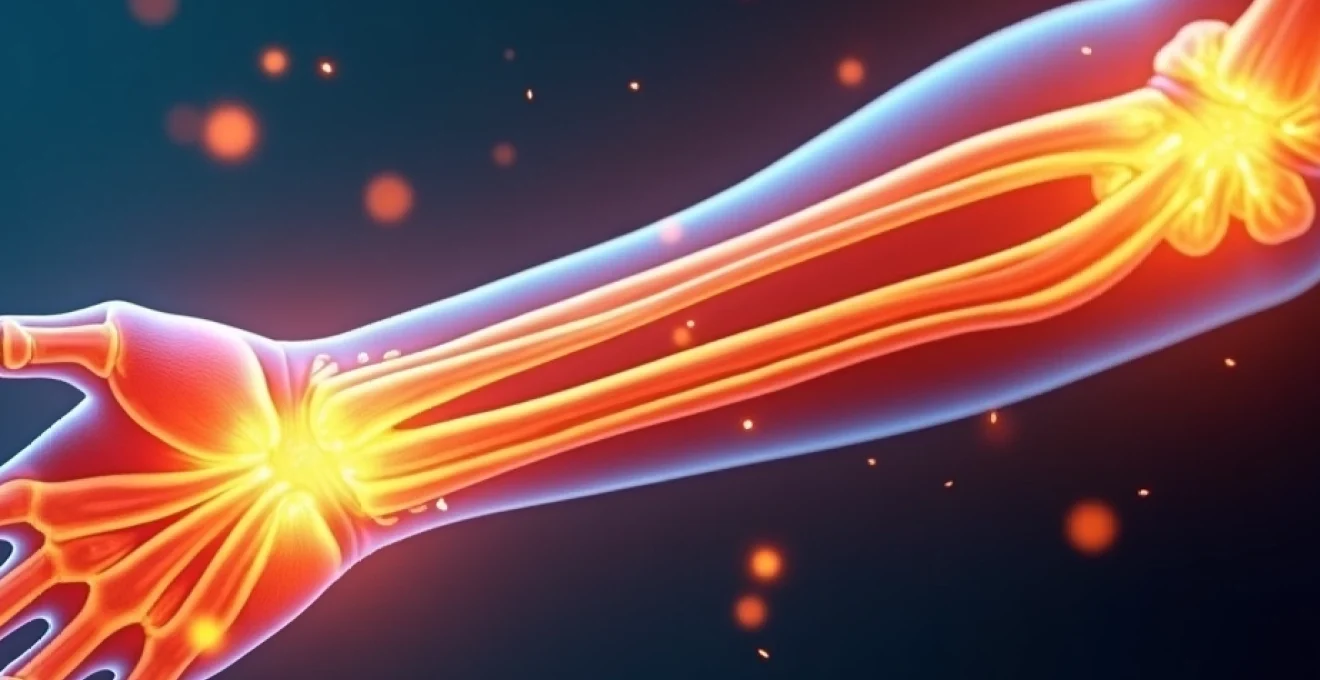
A burning sensation in the left forearm represents a complex symptom that can arise from numerous underlying pathologies affecting the neurological, vascular, musculoskeletal, or systemic physiological systems. This uncomfortable and often debilitating sensation frequently prompts individuals to seek medical attention, as it can significantly impact daily activities and quality of life. Understanding the multifaceted nature of forearm burning sensations requires examining the intricate anatomical relationships between peripheral nerves, blood vessels, muscles, and tendons that comprise the upper extremity’s functional framework.
The left forearm contains critical structures including the radius and ulna bones, multiple muscle compartments housing flexor and extensor muscles, major peripheral nerves such as the median, ulnar, and radial nerves, and an extensive vascular network supplying oxygen and nutrients to these tissues. When any of these structures becomes compromised through injury, compression, inflammation, or systemic disease, the resulting symptoms can manifest as burning, tingling, numbness, or pain radiating throughout the forearm region.
Neurological pathways and peripheral nerve dysfunction in left forearm burning sensations
Peripheral nerve dysfunction represents one of the most common causes of burning sensations in the left forearm. The complex network of nerves traversing the upper extremity can become compromised at various anatomical locations, each producing distinct symptom patterns. Understanding these neurological pathways helps clinicians differentiate between various nerve entrapment syndromes and other neuropathic conditions affecting the forearm region.
Nerve compression syndromes account for approximately 65% of all cases presenting with burning forearm sensations, making them the primary consideration in diagnostic evaluation.
Median nerve compression and carpal tunnel syndrome manifestations
Carpal tunnel syndrome, affecting the median nerve as it passes through the carpal tunnel at the wrist, frequently produces burning sensations that radiate proximally into the forearm. The median nerve provides sensory innervation to the thumb, index, middle, and radial half of the ring finger, while also supplying motor function to the thenar muscles. When compressed within the carpal tunnel, patients typically experience burning pain that worsens at night and may extend from the wrist up into the forearm and occasionally to the shoulder.
The pathophysiology involves increased pressure within the carpal tunnel, often resulting from synovial inflammation, fluid retention, or anatomical variations. Repetitive wrist motions , pregnancy, diabetes, hypothyroidism, and rheumatoid arthritis represent common predisposing factors. Patients frequently describe the burning sensation as electric-like or accompanied by tingling and numbness, particularly affecting the thumb and first three fingers.
Ulnar nerve entrapment at cubital tunnel and guyon’s canal
Ulnar nerve entrapment can occur at multiple locations along its course, with the cubital tunnel at the elbow and Guyon’s canal at the wrist being the most common sites. When compressed at the cubital tunnel, patients experience burning sensations along the medial forearm, extending from the elbow to the hand. This condition, known as cubital tunnel syndrome, affects approximately 25 per 100,000 individuals annually and represents the second most common peripheral nerve entrapment syndrome.
The ulnar nerve provides sensation to the little finger and ulnar half of the ring finger, while innervating most of the intrinsic hand muscles. Prolonged elbow flexion , direct pressure on the elbow, or anatomical variations can precipitate compression symptoms. Patients often report burning pain that intensifies during activities requiring sustained elbow flexion or when sleeping with the arm bent under the pillow.
Radial nerve posterior interosseous branch compression syndromes
Radial nerve compression syndromes affecting the forearm typically involve the posterior interosseous nerve, a motor branch of the radial nerve that innervates the extensor muscles of the forearm. While primarily motor in function, compression can produce burning sensations along the dorsal forearm due to sympathetic nerve involvement and referred pain patterns. Radial tunnel syndrome occurs when the nerve becomes compressed as it passes through the supinator muscle or beneath the arcade of Frohse.
Patients with radial nerve compression often experience deep, aching burning pain along the lateral and posterior aspects of the forearm, particularly during activities requiring repetitive forearm rotation or gripping motions. The burning sensation may be accompanied by weakness in finger and thumb extension, making it difficult to perform tasks requiring fine motor control.
Cervical radiculopathy C6-C8 dermatome distribution patterns
Cervical radiculopathy involving the C6, C7, or C8 nerve roots can produce burning sensations that radiate from the neck into the left forearm following specific dermatome patterns. Cervical disc herniation , degenerative changes, or foraminal stenosis can compress these nerve roots, resulting in neurological symptoms that extend beyond the cervical spine. C6 radiculopathy typically affects the lateral forearm, C7 involves the posterior forearm and middle finger region, while C8 radiculopathy produces symptoms along the medial forearm and ulnar digits.
The burning sensation associated with cervical radiculopathy often follows a dermatomal distribution and may be accompanied by neck pain, muscle weakness, and reflex changes. Patients frequently report symptom exacerbation with certain neck movements or positions, particularly extension and ipsilateral rotation, which can narrow the neural foramina and increase nerve root compression.
Vascular insufficiency and circulatory disorders affecting left forearm sensation
Vascular disorders affecting the upper extremity circulation can produce burning sensations through various mechanisms, including ischaemia, venous congestion, and neurogenic inflammation secondary to vessel compromise. The complex arterial and venous networks supplying the forearm can become compromised through thrombotic events, compression syndromes, or vasospastic disorders, each presenting with characteristic symptom patterns that may include burning sensations.
Subclavian steal syndrome and thoracic outlet compression
Subclavian steal syndrome occurs when stenosis or occlusion of the subclavian artery proximal to the vertebral artery origin creates retrograde flow through the vertebral artery during upper extremity exercise. This phenomenon can produce burning sensations in the affected arm due to exercise-induced ischaemia. Thoracic outlet syndrome, involving compression of neurovascular structures as they traverse the thoracic outlet, can similarly produce burning sensations through both neurogenic and vascular mechanisms.
The anterior scalene muscle, first rib, and clavicle form anatomical boundaries that can compress the subclavian vessels and brachial plexus. Repetitive overhead activities , poor posture, or anatomical variations such as cervical ribs can predispose individuals to thoracic outlet compression. Patients typically experience burning pain that worsens with arm elevation or carrying objects, often accompanied by colour changes and temperature differences in the affected extremity.
Arterial thrombosis in brachial and radial circulation
Acute arterial thrombosis affecting the brachial or radial arteries can produce severe burning pain due to acute ischaemia of forearm tissues. While less common than venous thrombosis, arterial occlusion represents a medical emergency requiring immediate intervention to prevent tissue necrosis. Predisposing factors include hypercoagulable states, atrial fibrillation, arterial trauma, or embolic events from cardiac sources.
Patients with arterial thrombosis present with the classic signs of acute limb ischaemia, including severe burning pain, pallor, pulselessness, paraesthesias, paralysis, and poikilothermia. The burning sensation results from tissue hypoxia and metabolic acidosis, creating an emergency situation requiring immediate vascular surgical consultation and possible thrombectomy or thrombolytic therapy.
Venous stasis and deep vein thrombosis complications
Upper extremity deep vein thrombosis, though less common than lower extremity involvement, can produce burning sensations through venous congestion and secondary inflammation. The axillary, subclavian, or brachial veins may become thrombosed due to central venous catheter placement, malignancy, hypercoagulable states, or effort thrombosis following strenuous upper extremity activity.
The burning sensation associated with upper extremity DVT typically accompanies swelling, skin discolouration, and prominent superficial venous collaterals. Paget-Schroetter syndrome , or effort thrombosis, commonly affects young athletes or individuals performing repetitive overhead activities, producing burning pain and swelling that develops over hours to days following the inciting activity.
Raynaud’s phenomenon and vasospastic disorders
Raynaud’s phenomenon, characterised by episodic vasospasm of digital arteries in response to cold or stress, can produce burning sensations during the reactive hyperaemia phase following vasoconstriction. Primary Raynaud’s disease affects approximately 3-5% of the population, while secondary Raynaud’s phenomenon occurs in association with connective tissue disorders, vibration exposure, or certain medications.
The characteristic triphasic colour changes—white (ischaemia), blue (cyanosis), and red (reactive hyperaemia)—are often accompanied by burning pain during the reperfusion phase. Patients describe intense burning sensations as circulation returns to the affected digits and forearm, often requiring several minutes to resolve completely.
Musculoskeletal inflammation and overuse syndromes
Musculoskeletal disorders affecting the forearm frequently produce burning sensations through inflammatory processes involving tendons, muscles, and fascial compartments. These conditions typically result from repetitive use patterns, biomechanical imbalances, or acute traumatic injuries that disrupt normal tissue homeostasis. Understanding the anatomical relationships between various muscle groups and their tendinous attachments helps explain the distribution and character of burning sensations associated with these disorders.
Lateral epicondylitis and extensor tendon inflammation
Lateral epicondylitis, commonly known as tennis elbow, involves inflammatory changes affecting the common extensor tendon origin at the lateral epicondyle of the humerus. This condition can produce burning sensations that radiate from the lateral elbow down the posterior and lateral aspects of the forearm. The pathophysiology involves degenerative changes within the extensor carpi radialis brevis tendon, often resulting from repetitive wrist extension and gripping activities.
Patients typically describe a burning ache that worsens with gripping activities, wrist extension against resistance, or lifting objects with the affected arm. The burning sensation may be accompanied by morning stiffness and tends to improve with rest but returns with activity resumption. Occupational factors such as computer use, manual labour, or racquet sports represent common predisposing activities.
Compartment syndrome in flexor and extensor compartments
Forearm compartment syndrome, while less common than its lower extremity counterpart, can produce severe burning sensations due to increased pressure within fascial compartments containing muscles, nerves, and blood vessels. The forearm contains multiple compartments, including the volar (flexor), dorsal (extensor), and mobile wad compartments, each susceptible to pressure elevation following trauma, overuse, or vascular compromise.
Acute compartment syndrome represents a surgical emergency, with burning pain being one of the earliest and most reliable symptoms. The pain typically exceeds what would be expected from the apparent injury severity and worsens with passive stretching of muscles within the affected compartment. Chronic exertional compartment syndrome can produce similar burning sensations during specific activities, resolving with rest but recurring with activity resumption.
Intersection syndrome and de quervain’s tenosynovitis
Intersection syndrome occurs where the tendons of the first dorsal compartment (abductor pollicis longus and extensor pollicis brevis) cross over the second dorsal compartment tendons (extensor carpi radialis longus and brevis) approximately 4-8 centimetres proximal to Lister’s tubercle. This crossing point can develop inflammatory changes producing burning sensations along the radial aspect of the forearm.
De Quervain’s tenosynovitis involves inflammation of the first dorsal compartment tendons as they pass through a fibro-osseous tunnel at the radial styloid process. Both conditions can produce burning pain that radiates proximally into the forearm, particularly during thumb and wrist movements. Repetitive gripping and twisting motions , common in activities such as rowing, skiing, or racquet sports, represent typical precipitating factors.
Pronator teres syndrome and anterior interosseous nerve impingement
Pronator teres syndrome involves compression of the median nerve as it passes between the two heads of the pronator teres muscle in the proximal forearm. This condition can produce burning sensations along the volar forearm, accompanied by numbness in the median nerve distribution and weakness of thumb flexion and index finger flexion at the distal interphalangeal joint when the anterior interosseous nerve is involved.
The syndrome typically results from repetitive pronation activities or direct trauma to the proximal forearm. Patients describe burning pain that worsens with resisted pronation or prolonged forearm use, often accompanied by aching that extends from the proximal forearm to the hand. Differentiation from carpal tunnel syndrome requires careful clinical examination and often electrodiagnostic testing.
Systemic medical conditions manifesting as forearm burning
Numerous systemic medical conditions can manifest with burning sensations in the forearm through various pathophysiological mechanisms. Diabetes mellitus represents the most common systemic cause of peripheral neuropathy, affecting approximately 50% of individuals with long-standing diabetes. Diabetic peripheral neuropathy typically follows a distal-to-proximal pattern, but can occasionally present with proximal symptoms including forearm burning sensations, particularly in cases of diabetic amyotrophy or multiple mononeuropathies.
Autoimmune disorders such as rheumatoid arthritis, systemic lupus erythematosus, and vasculitic conditions can produce forearm burning through multiple mechanisms including peripheral neuropathy, joint inflammation, and vascular compromise. Inflammatory arthritis affecting the wrist and elbow joints can cause secondary nerve compression or direct inflammatory involvement of peripheral nerves, resulting in burning sensations that may precede obvious joint symptoms.
Thyroid disorders, both hyperthyroidism and hypothyroidism, can predispose individuals to carpal tunnel syndrome and other peripheral nerve entrapment syndromes through mechanisms involving fluid retention, myxoedematous tissue infiltration, or metabolic effects on nerve function. Vitamin deficiencies, particularly B12, B6, and folate, can cause peripheral neuropathy with burning sensations, while vitamin B6 toxicity from excessive supplementation can paradoxically produce similar symptoms.
Renal disease, liver dysfunction, and certain malignancies can produce paraneoplastic neuropathies or metabolic disturbances leading to peripheral nerve dysfunction. Multiple myeloma, lung cancer, and breast cancer are particularly associated with sensory neuropathies that may present with burning forearm sensations as early manifestations of the underlying malignancy.
Occupational and repetitive strain injury mechanisms
Occupational factors play a significant role in the development of forearm burning sensations, with certain professions and activities carrying higher risks for upper extremity disorders. Computer users, assembly line workers, musicians, and healthcare professionals frequently develop repetitive strain injuries affecting the forearm region. The modern workplace environment, characterised by prolonged computer use and static posturing, has contributed to an epidemic of upper extremity musculoskeletal disorders.
Repetitive strain injuries typically develop gradually over weeks to months through cumulative microtrauma to musculoskeletal and neurological structures. Poor ergonomic positioning , inadequate rest periods, high force requirements, and awkward postures represent primary risk factors for developing these conditions. Workers in manufacturing industries exposed to vibration from power tools face additional risks for hand-arm vibration syndrome, which can produce burning sensations and neurological symptoms.
The pathophysiology of repetitive strain injuries involves multiple mechanisms including tendon inflammation, nerve compression from soft tissue swelling, muscle fatigue leading to altered movement patterns, and cumulative stress on anatomical structures. Prevention strategies focus on ergonomic modifications, regular breaks, strengthening exercises, and early intervention when symptoms first develop.
Studies demonstrate that implementing comprehensive ergonomic programmes can reduce upper extremity work-related musculoskeletal disorders
by up to 40% when consistently implemented across workplace environments.
Musicians, particularly string players and pianists, face unique risks for developing forearm burning sensations due to the highly repetitive and precise nature of their craft. Hours of daily practice involving rapid finger movements, sustained grip positions, and repetitive bowing or striking motions can lead to overuse syndromes affecting multiple anatomical structures simultaneously. The combination of high performance demands and inadequate recovery time creates an environment conducive to cumulative tissue damage and subsequent burning sensations.
Diagnostic algorithms and clinical assessment protocols
Establishing an accurate diagnosis for left forearm burning sensations requires a systematic approach incorporating detailed history-taking, comprehensive physical examination, and appropriate diagnostic testing. The initial clinical assessment must focus on symptom characteristics, including onset, duration, quality, location, aggravating and alleviating factors, and associated symptoms. Temporal patterns provide crucial diagnostic clues, with nocturnal symptoms suggesting carpal tunnel syndrome, while activity-related burning may indicate overuse syndromes or vascular insufficiency.
Physical examination begins with inspection of the entire upper extremity, assessing for visible deformities, muscle atrophy, skin changes, or swelling that might suggest underlying pathology. Palpation of anatomical landmarks helps identify areas of tenderness, trigger points, or masses that could contribute to nerve compression. Range of motion testing at the cervical spine, shoulder, elbow, and wrist joints reveals limitations that might indicate musculoskeletal involvement or compensatory movement patterns.
Neurological examination represents a critical component of the diagnostic process, involving assessment of motor strength, sensory function, and deep tendon reflexes throughout the upper extremity. Provocative maneuvers such as Tinel’s sign, Phalen’s test, and the upper limb tension test can help localize nerve compression sites and reproduce symptoms. Electrodiagnostic studies, including nerve conduction studies and electromyography, provide objective evidence of nerve dysfunction and help differentiate between various neuropathic conditions.
Imaging studies may be indicated based on clinical findings, with ultrasound providing real-time visualization of nerve compression sites and soft tissue abnormalities. Magnetic resonance imaging offers superior soft tissue contrast for evaluating complex anatomical relationships, while computed tomography with contrast can assess vascular pathology when circulatory disorders are suspected. Laboratory investigations should be considered to exclude systemic conditions such as diabetes, thyroid dysfunction, vitamin deficiencies, or autoimmune disorders that might manifest with peripheral neuropathy.
The diagnostic accuracy for peripheral nerve entrapment syndromes increases significantly when clinical examination findings are corroborated with appropriate electrodiagnostic testing, achieving sensitivity rates exceeding 85% for most common conditions.
Risk stratification tools help clinicians prioritize diagnostic considerations based on patient demographics, occupational factors, and symptom patterns. Young athletes with acute onset burning may require immediate assessment for compartment syndrome, while middle-aged office workers with gradual onset nocturnal symptoms warrant evaluation for carpal tunnel syndrome. The presence of bilateral symptoms should prompt investigation for systemic causes, while unilateral involvement typically suggests local mechanical or compressive etiologies.
Differential diagnosis must consider the full spectrum of potential causes, from benign overuse syndromes to serious conditions such as thoracic outlet syndrome, arterial thrombosis, or underlying malignancy. The clinical decision-making process involves weighing the probability of various diagnoses based on epidemiological data, symptom characteristics, and examination findings. What factors might indicate the need for urgent intervention versus conservative management approaches?
Treatment algorithms should be individualized based on the specific diagnosis, symptom severity, functional limitations, and patient preferences. Conservative management typically forms the foundation of treatment for most conditions, incorporating activity modification, ergonomic improvements, anti-inflammatory medications, and targeted rehabilitation exercises. Early intervention with appropriate conservative measures can prevent progression to chronic conditions requiring more invasive treatments.
When conservative management fails to provide adequate symptom relief or when severe neurological deficits are present, surgical intervention may be necessary. The timing of surgical referral depends on multiple factors including symptom duration, severity of functional impairment, presence of motor weakness or sensory loss, and failure of conservative treatments. Like a skilled conductor orchestrating a symphony, the clinician must coordinate various treatment modalities to achieve optimal patient outcomes while minimizing risks and complications.
Follow-up protocols should be established to monitor treatment response and identify patients requiring escalation of care. Regular reassessment allows for treatment modifications based on symptom progression or improvement, ensuring that therapeutic interventions remain appropriate and effective. The integration of patient-reported outcome measures provides valuable insights into treatment effectiveness from the patient’s perspective, complementing objective clinical assessments and guiding future management decisions.