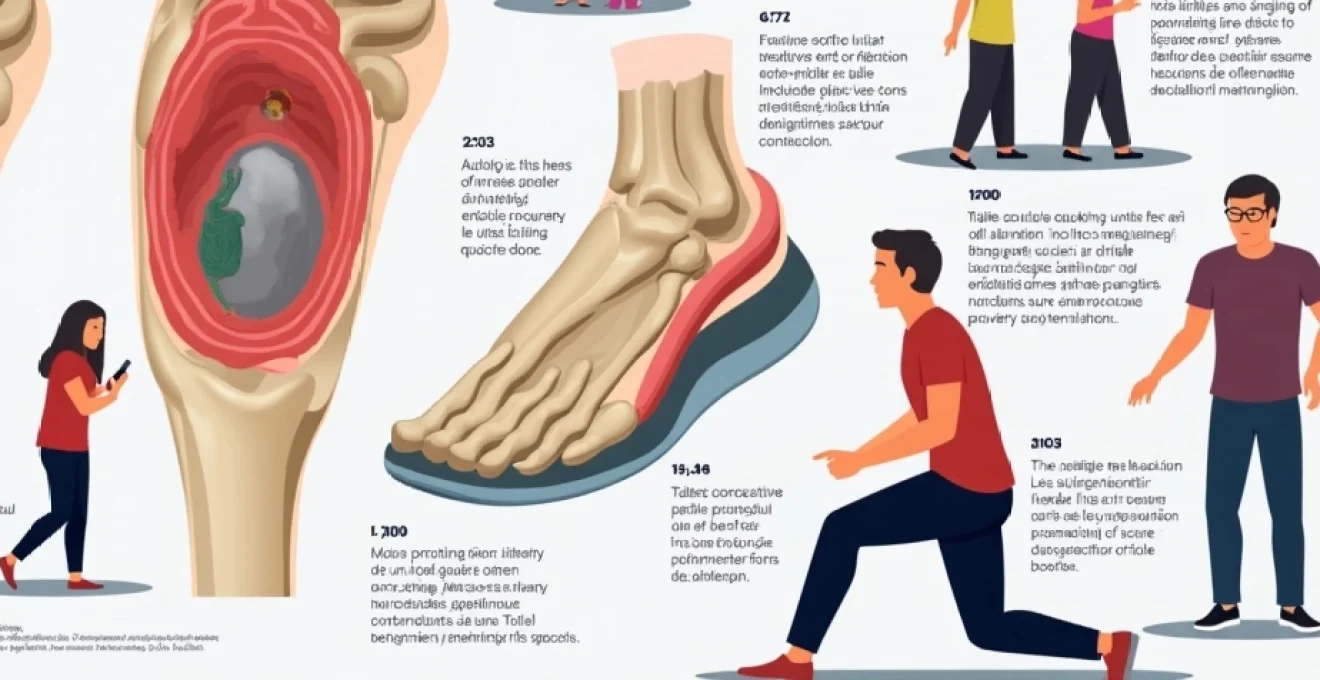
Osteochondral ankle surgery represents a sophisticated approach to addressing cartilage and bone defects within the ankle joint, offering patients renewed hope for pain relief and restored mobility. These procedures target osteochondral lesions of the talus (OLT), which affect both the cartilage surface and underlying bone structure. Understanding the recovery timeline becomes crucial for patients and healthcare providers alike, as healing durations vary significantly based on surgical technique, lesion characteristics, and individual patient factors. The complexity of ankle joint mechanics and the demanding nature of weight-bearing activities make recovery protocols particularly important for achieving optimal outcomes.
Recovery expectations extend far beyond simple wound healing, encompassing cartilage regeneration, bone remodelling, and gradual return to functional activities. Modern surgical techniques have revolutionised treatment approaches, with minimally invasive arthroscopic procedures becoming increasingly prevalent. The success of osteochondral ankle surgery depends heavily on adherence to carefully structured rehabilitation protocols , which balance tissue protection with progressive mobilisation to prevent complications whilst promoting healing.
Osteochondral ankle surgery procedures and Post-Operative timeline expectations
The landscape of osteochondral ankle surgery encompasses various sophisticated techniques, each with distinct recovery trajectories and rehabilitation requirements. Ankle arthroscopy serves as the foundation for most procedures, utilising small incisions typically measuring less than half an inch to access the joint space. This minimally invasive approach significantly reduces tissue trauma compared to open surgical techniques, resulting in accelerated initial healing phases and reduced post-operative complications.
Modern surgical interventions address osteochondral lesions through different mechanisms, from simple debridement to complex transplantation procedures. The choice of technique depends on lesion size, location, patient age, activity level, and previous treatment outcomes. Each surgical approach requires tailored recovery protocols designed to optimise healing whilst preventing complications such as graft failure or incomplete cartilage integration.
Autologous osteochondral transplantation (OATS) recovery phases
Autologous osteochondral transplantation represents one of the most comprehensive surgical solutions for larger osteochondral defects, involving the transfer of healthy cartilage and bone plugs from non-weight-bearing areas of the knee to damaged ankle regions. The initial recovery phase extends for approximately 6-8 weeks, during which patients must maintain non-weight-bearing status to protect the transplanted grafts. This critical period allows for initial graft integration and prevents displacement of the carefully positioned osteochondral plugs.
The intermediate recovery phase spans weeks 8-16, characterising a gradual transition to protected weight-bearing activities within a walking boot. During this period, the transplanted cartilage begins integrating with surrounding tissues, whilst the underlying bone component undergoes remodelling processes. Patients typically commence formal physiotherapy programmes focusing on range of motion exercises and gentle strengthening activities. The success of OATS procedures relies heavily on patient compliance with weight-bearing restrictions and rehabilitation protocols.
Matrix-induced autologous chondrocyte implantation (MACI) healing protocol
MACI procedures involve a two-stage process, beginning with cartilage biopsy followed by laboratory cultivation of chondrocytes on a collagen membrane. The recovery timeline extends beyond other techniques due to the biological nature of cartilage regeneration. Initial healing phases require 8-12 weeks of protected weight-bearing to allow the implanted chondrocytes to establish within the defect site and begin producing cartilage matrix.
The maturation phase of MACI recovery can extend 6-12 months, during which the newly formed cartilage gradually develops the mechanical properties necessary for normal joint function. Advanced imaging studies, including MRI assessments, monitor cartilage maturation throughout this extended recovery period. Patients experience progressive improvement in symptoms, with optimal outcomes typically achieved 12-18 months post-operatively.
Microfracture technique Post-Surgical rehabilitation schedule
Microfracture surgery represents the most commonly performed osteochondral procedure due to its technical simplicity and cost-effectiveness. The technique involves creating small perforations in the subchondral bone to stimulate bleeding and subsequent fibrocartilage formation. Recent evidence supports accelerated rehabilitation protocols that challenge traditional lengthy non-weight-bearing periods, with some patients achieving full weight-bearing status within 2-3 weeks post-operatively.
The fibrocartilage healing response typically occurs within 8-12 weeks, though the tissue quality differs from native hyaline cartilage. Patients generally experience significant symptom improvement within 3-6 months, with continued enhancement for up to one year. Modern accelerated protocols have demonstrated comparable outcomes to traditional conservative approaches whilst reducing complications associated with prolonged immobilisation.
Fresh osteochondral allograft transplantation recovery milestones
Fresh osteochondral allograft transplantation addresses large or complex osteochondral defects using donor tissue, typically reserved for challenging cases where other techniques prove inadequate. The recovery process requires extended protection periods due to the size and complexity of transplanted tissues. Initial non-weight-bearing phases extend 8-12 weeks, followed by gradual progression to full weight-bearing over subsequent months.
Integration of allograft tissue occurs gradually over 6-12 months, with ongoing remodelling processes extending beyond one year. The larger surgical exposure required for allograft procedures may result in increased soft tissue healing requirements compared to arthroscopic techniques. Long-term success rates remain excellent when appropriate patient selection criteria and rehabilitation protocols are followed meticulously.
Anatomical factors influencing osteochondral lesion recovery duration
The ankle joint’s unique anatomical characteristics significantly influence healing timelines following osteochondral surgery. The talus bone receives limited blood supply through small perforating vessels, creating challenges for bone healing and cartilage regeneration. This vascular limitation explains why osteochondral lesions of the talus often fail to heal spontaneously and require surgical intervention. Understanding these anatomical constraints helps establish realistic recovery expectations and guides rehabilitation protocol development.
Joint congruency and biomechanical loading patterns within the ankle create additional complexity for healing tissues. The ankle experiences forces equivalent to 3-5 times body weight during normal walking activities, rising to 8-10 times body weight during running or jumping. These substantial loading forces necessitate careful progression of weight-bearing activities to prevent premature failure of healing tissues whilst promoting appropriate mechanical stimulation for tissue maturation.
Talar dome lesion location impact on healing timeframes
Lesion location within the talar dome significantly influences both surgical approach and recovery duration. Medial talar lesions typically demonstrate better healing potential due to superior blood supply compared to lateral lesions. Posterior and deep lesions may require additional surgical exposure, potentially extending initial healing phases and complicating rehabilitation protocols. The accessibility of lesions during arthroscopic procedures also affects surgical complexity and subsequent recovery requirements.
Lesion size and depth further modify healing expectations, with larger and deeper defects requiring extended protection periods and more aggressive rehabilitation approaches. Contained lesions with intact subchondral bone heal more predictably than those involving significant bone loss or cyst formation. The relationship between lesion characteristics and healing outcomes emphasises the importance of thorough pre-operative assessment and individualised treatment planning.
Medial malleolus osteotomy effects on recovery progression
When osteochondral lesions require medial malleolus osteotomy for adequate surgical exposure, recovery timelines extend significantly due to additional bone healing requirements. The osteotomy site typically requires 6-8 weeks for initial healing, during which weight-bearing restrictions remain more stringent than arthroscopic procedures. Hardware removal may become necessary in some cases, adding further surgical interventions to the recovery process.
The combination of osteochondral repair and osteotomy healing creates complex rehabilitation challenges, requiring careful coordination of mobilisation protocols to address both surgical sites appropriately. Patients undergoing osteotomy procedures generally experience longer periods of functional limitation and may require extended physiotherapy programmes to achieve optimal outcomes.
Subchondral bone density variations in healing response
Subchondral bone quality significantly influences healing outcomes following osteochondral surgery, with denser bone typically demonstrating superior integration capacity for grafts and regenerative tissues. Patients with osteoporotic changes or metabolic bone diseases may experience delayed healing and require modified rehabilitation protocols. Age-related changes in bone density and remodelling capacity also affect expected recovery timelines, with younger patients generally demonstrating faster healing responses.
The presence of subchondral cysts or sclerotic changes complicates surgical procedures and may necessitate additional bone grafting procedures. These factors extend recovery timelines and may influence long-term outcomes. Advanced imaging assessment helps identify these variations pre-operatively, allowing for appropriate surgical planning and realistic patient counselling regarding recovery expectations.
Ankle joint biomechanics during cartilage regeneration
The ankle joint’s complex biomechanical environment presents unique challenges during cartilage regeneration phases. Normal ankle motion involves multiple planes of movement, including dorsiflexion, plantarflexion, inversion, and eversion, creating varied loading patterns across different regions of the joint surface. Protecting healing cartilage whilst maintaining joint mobility requires sophisticated rehabilitation approaches that gradually introduce appropriate mechanical stimuli.
Ground reaction forces transmitted through the ankle during weight-bearing activities provide essential mechanical stimulation for cartilage maturation, yet excessive loading can damage healing tissues. The optimal balance between protection and stimulation remains challenging to achieve, requiring individualised approaches based on patient factors and healing progression. Modern rehabilitation protocols increasingly utilise partial weight-bearing progressions and controlled loading exercises to optimise this balance.
Phase-specific recovery protocols and Weight-Bearing restrictions
Contemporary osteochondral surgery recovery protocols follow evidence-based phase-specific approaches that balance tissue protection with functional restoration. The initial inflammatory phase typically lasts 1-2 weeks post-operatively, focusing on pain management, swelling control, and wound care. During this period, patients remain non-weight-bearing with the ankle immobilised in a protective boot or cast. Elevation and ice application help manage post-operative oedema, whilst prescribed medications address pain and potential complications.
The proliferation phase extends from weeks 2-8 post-operatively, characterised by early tissue formation and initial healing responses. Weight-bearing restrictions vary significantly based on surgical technique, with microfracture procedures now permitting accelerated progression compared to transplantation techniques. Range of motion exercises commence during this phase, initially performed with the protective boot removed for exercise sessions only. Patient compliance with weight-bearing restrictions during this critical period significantly influences long-term outcomes and complication rates.
The remodelling phase spans months 2-12 post-operatively, involving gradual tissue maturation and functional restoration. Progressive weight-bearing advancement allows for controlled loading of healing tissues whilst promoting appropriate mechanical adaptation. Formal physiotherapy programmes intensify during this phase, incorporating strengthening exercises, proprioceptive training, and activity-specific rehabilitation. The transition from protective footwear to normal shoes typically occurs around 8-12 weeks, depending on individual healing progression and surgical complexity.
Traditional rehabilitation regimes prevent full weight bearing for up to 8 weeks. The latest scientific evidence suggests this is not necessary for many patients, particularly those undergoing microfracture procedures.
Advanced rehabilitation phases focus on return to specific activities and sports participation. High-level athletes may require 6-12 months before returning to competitive activities, whilst recreational participants often achieve satisfactory function within 3-6 months. The variability in recovery timelines reflects individual differences in healing capacity, adherence to rehabilitation protocols, and specific functional demands. Ongoing monitoring through clinical assessments and advanced imaging helps guide progression decisions and identify potential complications requiring intervention.
Complications and extended recovery scenarios in osteochondral surgery
While osteochondral ankle surgery generally demonstrates excellent safety profiles with complication rates below 5%, certain adverse events can significantly extend recovery timelines and compromise outcomes. Infection remains the most serious early complication, potentially requiring additional surgical procedures and prolonged antibiotic therapy. Deep infections may necessitate graft removal or extensive debridement, essentially restarting the recovery process and potentially compromising long-term joint function.
Graft-related complications specific to transplantation procedures include graft subsidence, fragmentation, or failure to integrate with surrounding tissues. These complications typically become apparent 3-6 months post-operatively and may require revision surgery. Early recognition and intervention for graft complications can sometimes salvage procedures, though revision surgeries generally result in extended recovery periods and potentially diminished outcomes compared to primary procedures.
Adhesion formation represents a common complication that can significantly impact functional outcomes despite successful tissue healing. Intra-articular adhesions limit joint mobility and may cause persistent pain or catching sensations. Aggressive early mobilisation helps prevent adhesion formation, though some patients require arthroscopic adhesiolysis procedures to restore normal joint mechanics. The development of complex regional pain syndrome, though rare, can dramatically extend recovery timelines and require specialised pain management approaches.
Incomplete healing or poor-quality tissue formation occurs more frequently in patients with risk factors such as smoking, diabetes, or immunosuppression. These scenarios may require revision procedures or alternative treatment approaches, significantly extending overall recovery timelines. Patient education regarding modifiable risk factors becomes crucial for optimising healing potential and preventing complications that could compromise surgical outcomes.
Return to activity benchmarks for different patient demographics
Return to activity timelines following osteochondral ankle surgery vary significantly based on patient demographics, activity levels, and specific functional demands. Sedentary individuals typically achieve their functional goals within 3-4 months, focusing primarily on pain-free walking and basic activities of daily living. The absence of high-impact loading requirements allows for earlier functional satisfaction, though complete tissue maturation continues for 6-12 months regardless of activity level.
Recreational athletes face more complex return-to-activity decisions, balancing desire for sport participation with tissue healing requirements. Running activities typically commence 3-4 months post-operatively, progressing gradually from treadmill jogging to outdoor running on varied surfaces. Sport-specific training programmes help bridge the gap between basic rehabilitation and full activity participation, addressing movement patterns and loading demands specific to individual sports.
Professional and elite athletes require the most comprehensive rehabilitation approaches, with return-to-competition timelines extending 6-12 months post-operatively. These athletes undergo extensive functional testing, including biomechanical analysis and sport-specific assessments, before receiving clearance for unrestricted activity. The consequences of premature return or re-injury in professional athletes necessitate conservative approaches that prioritise long-term career longevity over immediate return to competition.
| Patient Category | Basic Function | Advanced Activities | Full Return |
|---|---|---|---|
| Sedentary | 6-8 weeks | 3-4 months | 4-6 months |
| Recreational Athlete | 8-12 weeks | 4-6 months | 6-9 months |
| Professional Athlete | 10-16 weeks | 6-9 months | 9-12 months |
Age-related factors significantly influence recovery expectations, with younger patients generally demonstrating faster healing and superior long-term outcomes. Patients over 40 years may require extended rehabilitation periods and face higher risks of incomplete healing or degenerative changes. However, age alone should not preclude surgical intervention, as many older patients achieve excellent functional improvements with appropriate procedures and realistic expectations.
Advanced imaging assessment during osteochondral recovery monitoring
Advanced imaging techniques play crucial roles in monitoring healing progression and guiding return-to-activity decisions following osteochondral ankle surgery. Magnetic resonance imaging (MRI) provides detailed assessment of cartilage healing, subchondral bone changes, and potential complications throughout the recovery process. Serial MRI studies help identify early signs of graft failure, incomplete healing, or adverse tissue responses that may require intervention.
Specialised MRI sequences, including T2 mapping and delayed gadolinium-enhanced MRI of cartilage (dGEMRIC), offer quantitative assessment of cartilage quality and maturation. These advanced techniques help distinguish between mature, functional cartilage and immature or inferior-quality repair tissue. The correlation between imaging findings and clinical outcomes continues improving with technological advances and enhanced understanding of healing processes.
It will take 1 year to fully assess the success of surgery, with ongoing imaging assessment
protocols helping optimize outcomes while minimizing radiation exposure for patients undergoing complex recovery processes.
Computed tomography (CT) scanning provides excellent bone detail assessment, particularly valuable for evaluating subchondral bone healing and graft incorporation in transplantation procedures. Three-dimensional CT reconstructions help visualize complex anatomical relationships and identify subtle complications that may not be apparent on standard radiographs. The superior bone contrast resolution of CT imaging makes it ideal for monitoring osteotomy healing sites and detecting early signs of hardware complications.
Weight-bearing CT represents an emerging technology that allows assessment of joint mechanics under physiological loading conditions. This innovative imaging approach provides insights into how healing tissues respond to mechanical stress, potentially revolutionizing return-to-activity decision making. The ability to visualize joint function under load offers unprecedented opportunities to optimize rehabilitation protocols and identify patients at risk for long-term complications.
Ultrasound imaging serves as a valuable adjunct for monitoring soft tissue healing and detecting fluid collections or inflammatory changes around surgical sites. The real-time nature of ultrasound examination allows for dynamic assessment of ankle joint mechanics and can guide injection procedures when complications arise. Additionally, ultrasound provides a cost-effective monitoring option for routine follow-up assessments, reducing the need for more expensive imaging modalities.
The integration of multiple imaging modalities creates comprehensive assessment protocols that address different aspects of the healing process. Combining functional imaging with structural assessment provides healthcare providers with detailed information necessary for making informed decisions about activity progression and identifying potential complications before they become clinically apparent. Modern imaging protocols emphasize timing-specific assessments that align with expected healing phases, optimizing both clinical utility and cost-effectiveness.
Artificial intelligence and machine learning applications in imaging interpretation continue expanding, offering potential for more accurate assessment of healing quality and outcome prediction. These technological advances may eventually provide objective measurements of cartilage quality and healing progression, reducing subjective interpretation variability and improving clinical decision-making processes. The future of osteochondral recovery monitoring lies in sophisticated imaging integration that provides both detailed tissue assessment and functional evaluation capabilities.
Patient education regarding imaging findings becomes crucial for maintaining realistic expectations and ensuring compliance with rehabilitation protocols. Understanding the relationship between imaging appearance and functional recovery helps patients navigate the often lengthy recovery process with appropriate expectations. Healthcare providers must balance the desire for comprehensive monitoring with practical considerations such as cost, radiation exposure, and clinical necessity when developing individualized imaging protocols for osteochondral surgery patients.