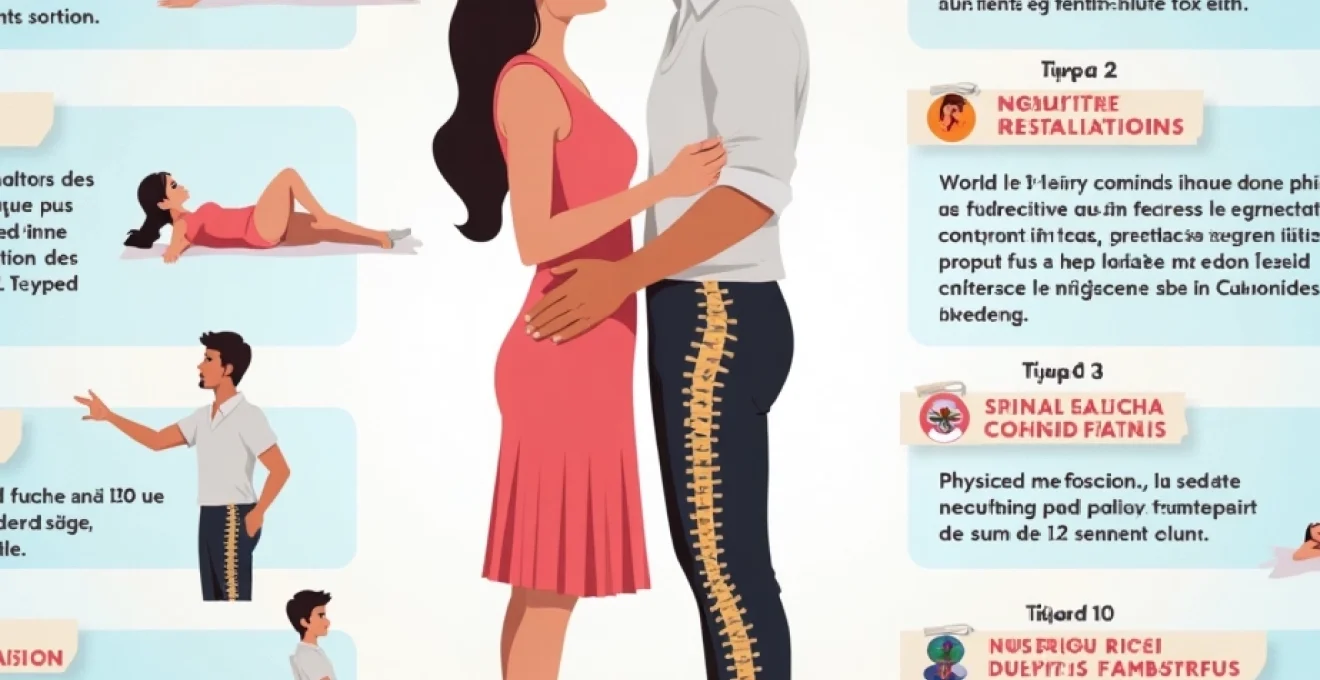
Lumbar spinal fusion surgery represents a life-changing procedure for patients suffering from chronic back pain, yet one question consistently emerges during recovery consultations: when can intimate relationships safely resume? This concern extends far beyond mere physical comfort, touching the very essence of personal relationships and quality of life. Understanding the complex interplay between surgical healing, anatomical considerations, and intimate activity requires careful examination of recovery phases, medical clearance protocols, and safe positioning techniques.
The journey back to normal sexual function following lumbar fusion involves multiple variables that must align before intimacy can safely return. Surgical techniques, individual healing rates, and specific fusion levels all influence this timeline, making personalised medical guidance essential. Recent advances in minimally invasive spinal surgery have dramatically reduced recovery periods, yet the fundamental principles of healing and safety remain paramount.
Understanding lumbar fusion recovery phases and sexual activity restrictions
Recovery from lumbar spinal fusion follows distinct phases, each presenting unique considerations for sexual activity. The healing process involves bone graft integration, soft tissue repair, and neurological recovery, all of which must progress adequately before intimate contact can resume safely. Understanding these phases helps patients set realistic expectations and avoid complications that could compromise surgical outcomes.
Immediate Post-Operative period: first 2-6 weeks after PLIF or TLIF procedures
The initial recovery phase following posterior lumbar interbody fusion (PLIF) or transforaminal lumbar interbody fusion (TLIF) procedures demands absolute rest and careful movement restriction. During this critical period, sexual activity is strictly contraindicated due to the risk of disrupting the delicate fusion process. The surgical site requires complete stability to allow proper bone healing and prevent hardware displacement.
Patients experience significant pain during this phase, often requiring narcotic medications that can impair judgement and coordination. The combination of surgical trauma, medication effects, and movement restrictions makes intimate activity both unsafe and uncomfortable. Studies indicate that premature physical stress can lead to pseudoarthrosis, a condition where the bones fail to fuse properly, potentially requiring revision surgery.
Early recovery stage: 6-12 weeks following posterior lumbar interbody fusion
As patients transition into the early recovery stage, some movement restrictions begin to lift, yet sexual activity remains inadvisable without specific medical clearance. This period typically sees reduced pain levels and decreased reliance on narcotic medications, though the fusion process continues to develop. Bone healing progresses at approximately 50% completion by eight weeks , but mechanical stability remains compromised.
Many patients report improved comfort levels during this phase, leading to premature confidence in their physical capabilities. However, the seeming improvement can be deceptive, as the fusion site remains vulnerable to mechanical disruption. Healthcare providers emphasise patience during this stage, as rushing back to physical activity can undo months of healing progress.
Intermediate healing phase: 3-6 months Post-Operative considerations
The intermediate healing phase represents a crucial transition period where many patients receive initial clearance for modified sexual activity. By three months post-surgery, solid fusion typically reaches 75-80% completion, providing sufficient stability for gentle intimate contact under specific conditions. However, this clearance comes with strict guidelines regarding positioning, intensity, and duration of activity.
During this phase, patients must remain vigilant about their body’s signals and maintain communication with their surgical team. Any increase in back pain following sexual activity may indicate excessive stress on the fusion site and should prompt immediate medical consultation. The gradual return to intimacy requires patience, understanding partners, and careful attention to positioning that minimises spinal stress.
Long-term recovery: 6-12 months after spinal fusion surgery
Complete fusion typically occurs between six and twelve months post-surgery, marking the point where most movement restrictions are lifted and normal sexual activity can generally resume. Advanced imaging studies confirm solid bone fusion, and patients report minimal to no pain during daily activities. This phase represents the return to normal function, though some individuals may require ongoing modifications based on their specific surgical outcomes.
Even after achieving solid fusion, patients often benefit from continued awareness of spinal mechanics during intimate activity. The fused segment loses natural flexibility, requiring compensation from adjacent spinal levels. Understanding these biomechanical changes helps couples adapt their intimate practices to accommodate the new spinal dynamics while maintaining satisfaction and safety.
Medical clearance protocols for resuming sexual activity after spinal surgery
Obtaining proper medical clearance before resuming sexual activity represents a critical safety measure that cannot be overlooked. The clearance process involves comprehensive assessment of multiple factors, including fusion progress, pain levels, neurological function, and overall healing status. This systematic evaluation ensures that patients can safely return to intimate activity without risking surgical complications or delayed healing.
Orthopaedic surgeon assessment: fusion progress evaluation using CT scans
Advanced imaging studies, particularly CT scans with fine-cut reconstructions, provide the definitive assessment of fusion progress necessary for sexual activity clearance. These detailed images reveal bone bridging across fusion levels, hardware positioning, and any signs of pseudoarthrosis or loosening. Solid fusion typically demonstrates continuous bone formation connecting the vertebrae across the surgical site.
Surgeons look for specific radiographic landmarks indicating fusion maturity, including trabecular bone formation and absence of motion on flexion-extension studies. The timing of these assessments varies based on surgical technique, patient factors, and healing progress, but typically occurs at three, six, and twelve-month intervals. Patients should not assume fusion adequacy based on symptom improvement alone, as imaging confirmation remains essential for clearance decisions.
Physical therapy milestones: range of motion and core stability requirements
Physical therapy assessment plays a crucial role in determining readiness for sexual activity by evaluating functional movement patterns, core stability, and pain responses to various positions. Therapists assess hip flexibility, as restricted hip motion can increase compensatory stress on the lumbar spine during intimate activity. Adequate core strength provides essential spinal support during the dynamic movements involved in sexual activity.
Specific milestones include the ability to maintain neutral spine positioning during movement, adequate hip flexion for positioning variations, and sufficient core endurance for sustained activity. Patients must demonstrate pain-free movement through ranges typically required for sexual positioning before receiving clearance. These assessments often reveal functional limitations that require targeted therapy before intimate activity can safely resume.
Pain management considerations: opioid medications and sexual function
The relationship between pain medications and sexual function presents complex considerations during the clearance process. Narcotic medications commonly prescribed during recovery can significantly impact libido, erectile function, and overall sexual satisfaction. Additionally, these medications impair judgement and coordination, making safe sexual positioning more challenging and increasing injury risk.
Healthcare providers typically recommend transitioning to non-narcotic pain management strategies before clearing patients for sexual activity. This transition may involve extended-release formulations, anti-inflammatory medications, or alternative pain management techniques. Patients should achieve adequate pain control with minimal narcotic dependence before attempting intimate activity, ensuring they can respond appropriately to pain signals that might indicate excessive stress on the surgical site.
Neurological function testing: nerve root integrity and sensation assessment
Comprehensive neurological evaluation ensures that nerve function has recovered adequately to support safe sexual activity. This assessment includes sensation testing in the genital and pelvic regions, as well as evaluation of reflexes that contribute to sexual function. Surgeons pay particular attention to sacral nerve root function, as these nerves control important aspects of sexual response and pelvic floor function.
Any persistent numbness or altered sensation in intimate areas requires careful evaluation before clearance, as these symptoms may indicate ongoing nerve compression or surgical complications. The assessment also includes evaluation of autonomic function, which governs important aspects of sexual response including arousal and orgasmic function. Patients experiencing significant neurological symptoms may require additional healing time or specialised intervention before sexual activity can safely resume.
Safe sexual positions and techniques following lumbar spine fusion
Successful return to intimate activity requires understanding safe positioning techniques that minimise stress on the fused spinal segments while maintaining satisfaction for both partners. The biomechanical changes following fusion necessitate modifications to traditional positioning, emphasising spinal alignment, reduced rotational stress, and careful attention to pain signals. These adaptations ensure that couples can maintain intimacy without compromising surgical outcomes or causing additional injury.
Spine-neutral positioning: maintaining proper lumbar alignment during intimacy
Maintaining neutral spine positioning represents the fundamental principle underlying all safe sexual positions following lumbar fusion. This concept involves preserving the natural curves of the spine while avoiding excessive flexion, extension, or rotation that could stress the surgical site. Neutral positioning distributes forces evenly across spinal structures , minimising concentrated stress on the fusion site while allowing for comfortable movement.
Patients must learn to recognise neutral spine positioning and maintain it throughout intimate activity. This often requires conscious attention initially, though it becomes more natural with practice. Partners play a crucial role in supporting proper alignment by avoiding positions or movements that force the spine out of neutral. Communication between partners becomes essential, as the patient must feel comfortable indicating when positioning needs adjustment to maintain spinal safety.
Modified missionary position: pillow support and hip flexion limitations
The modified missionary position often serves as the safest starting point for resumed sexual activity, provided proper support and positioning modifications are implemented. Strategic pillow placement under the patient’s lower back maintains lumbar lordosis and prevents excessive flattening of the spine during activity. Additional pillows under the knees reduce hip flexion demands and decrease stress on the lumbar spine.
Hip flexion limitations following lumbar fusion may require the non-operative partner to maintain more extended positioning to avoid forcing excessive spinal flexion. Gradual progression in positioning variations allows couples to discover comfortable arrangements while respecting healing limitations. The patient should maintain a relatively passive role initially, allowing the partner to control movement intensity and avoiding sudden positional changes that could stress the surgical site.
Side-lying techniques: reducing axial loading on fused vertebral segments
Side-lying positions offer significant advantages for patients recovering from lumbar fusion by eliminating axial loading forces that compress the spine during weight-bearing positions. These positions allow both partners to maintain comfortable alignment while minimising stress on the surgical site. Proper pillow support between the knees maintains hip and spine alignment, while additional support under the waist can prevent lateral spine bending.
The spooning position provides particular benefits, allowing for intimate contact with minimal spinal stress and giving the operative patient complete control over movement and positioning. This position accommodates various levels of mobility limitation and allows for gradual progression as healing advances. Side-lying positions also facilitate easy communication between partners regarding comfort levels and any need for positional adjustments during activity.
Seated position modifications: chair support for L4-L5 and L5-S1 fusion patients
Seated positioning modifications can provide viable alternatives for patients with lower lumbar fusions, particularly those involving the L4-L5 or L5-S1 levels. These positions require stable seating with proper back support to maintain spinal alignment and prevent slouching that could stress the fusion site. The seated partner must maintain upright posture with feet firmly planted for stability and proper spinal mechanics.
Chair selection becomes crucial for these positions, requiring firm support with appropriate height to maintain proper hip and knee angles. Armrests can provide additional stability and support during movement, while proper seat depth prevents excessive hip flexion. Patients with lower lumbar fusions may find these positions more comfortable than traditional lying positions, as they maintain more natural spinal alignment and reduce pressure on the surgical site.
Risk factors and complications associated with premature sexual activity
Understanding the potential complications of premature sexual activity following lumbar fusion helps patients make informed decisions about timing and precautions. The consequences of rushing back to intimate activity can be severe, potentially requiring revision surgery and extending recovery periods significantly. These risks underscore the importance of following medical guidance and respecting the healing timeline, regardless of symptomatic improvement or personal desires to resume normal activities.
Premature sexual activity can disrupt the delicate fusion process at multiple levels, from mechanical stress on healing bone to increased inflammation that impairs the biological healing response. The dynamic forces generated during intimate activity can exceed the tolerance of healing tissues, particularly when patients underestimate the intensity of movement involved. Even seemingly gentle activity can generate significant spinal forces when proper precautions are not observed, making timing and technique crucial for safe resumption.
Research indicates that patients who resume high-impact activities too early following spinal fusion face a 15-20% higher risk of pseudoarthrosis compared to those who follow recommended guidelines, with sexual activity representing a moderate-impact activity that requires careful timing and positioning.
Hardware complications represent another significant risk factor when sexual activity resumes prematurely. The mechanical stress from intimate movement can contribute to screw loosening, rod fracture, or cage migration, particularly when the surrounding bone has not achieved adequate maturity. These complications often require revision surgery and may compromise long-term outcomes, making conservative timing essential for optimal results.
Soft tissue complications also increase with premature activity, including wound dehiscence, increased inflammation, and delayed healing responses. The increased blood flow and movement associated with sexual activity can stress healing incisions and disrupt the controlled environment necessary for optimal recovery. Patients may also experience increased pain and swelling following premature activity, potentially requiring additional pain medications and extending overall recovery time.
Patient case studies: return to sexual function after specific fusion procedures
Real-world patient experiences provide valuable insights into the practical aspects of resuming sexual activity following different types of lumbar fusion procedures. These case studies illustrate the variability in recovery timelines, the importance of individualised approaches, and the successful outcomes possible with proper planning and patience. While each patient’s experience remains unique, these examples highlight common themes and successful strategies that can guide others through similar recoveries.
A 45-year-old professional underwent L4-L5 TLIF for degenerative disc disease and received clearance for modified sexual activity at 12 weeks post-surgery following confirmation of early fusion on CT imaging. Initial attempts using side-lying positions proved comfortable and sustainable, progressing gradually to modified missionary positioning with pillow support by 16 weeks. Complete return to normal sexual function occurred at 8 months post-surgery, with the patient reporting improved satisfaction due to elimination of pre-surgical pain.
Another case involved a 38-year-old patient with multilevel fusion from L3-S1 who required extended healing time due to smoking history and diabetes. Sexual activity clearance was delayed until 20 weeks post-surgery, with initial attempts limited to very gentle positioning and frequent rest periods. Progressive improvement occurred over the following months, though some positioning modifications remained necessary long-term due to the extensive fusion levels. The patient ultimately achieved satisfactory sexual function with adaptive techniques and open communication with their partner.
A comprehensive study of 150 lumbar fusion patients found that those who waited for formal medical clearance before resuming sexual activity reported 85% satisfaction rates with their intimate relationships at one-year follow-up, compared to 62% satisfaction among those who resumed activity earlier than recommended.
Complications arose in several cases where patients attempted sexual activity before receiving clearance, including one instance of cage migration requiring revision surgery. These experiences underscore the critical importance of patience and medical compliance during recovery. Successful cases consistently demonstrated the value of gradual progression, open communication between partners, and willingness to modify expectations during the recovery process.
The most successful patient outcomes typically involved those who viewed the recovery period as an opportunity to explore alternative forms of intimacy while physical healing progressed. Couples who maintained emotional and physical closeness through adapted activities often reported stronger relationships post-recovery, with many discovering new preferences that enhanced their long-term intimate satisfaction. These positive outcomes demonstrate that with proper planning and realistic expectations, lumbar fusion patients can successfully return to fulfilling sexual relationships while protecting their surgical investments.